Dublin, Ohio
Curving, tree-lined streets, the Mallway, and 21 parks — a planned garden suburb where the market still runs hot, and what it actually takes to buy or sell here.
Upper Arlington at a glance
Upper Arlington sits on the northwest side of Columbus — a city of about 36,800 people, just under 10 square miles, bordering Ohio State University to the southeast and the Scioto River to the west. It is the oldest planned suburb in Central Ohio, and it still looks like the plan: curving streets that follow the land, wide lawns, generous setbacks, mature trees, and small green spaces tucked between the houses.
The ground here was farmland before it was a neighborhood. In 1913, brothers King and Ben Thompson bought 840 acres from James T. Miller and laid out a “Country Club District” on the Garden City model — streets that follow the contours of the land instead of a grid, modeled on the Country Club District in Kansas City. The plan came from landscape architect William Pitkin Jr., and it called for copious trees, permanent open spaces, and houses set well back from the street. The name distinguished the new community from the older village of Arlington to the south — now Marble Cliff. In 1916 the development was interrupted when the National Guard used the area as a training camp, Camp Willis, for 8,000 servicemen; the camp was dismantled by September of that year. On March 20, 1918, Upper Arlington incorporated as a village, with a population of 200 and James Miller, the original landowner, as its first mayor. The Mallway business district, built in the 1920s, was the city’s first commercial district. Upper Arlington became a city on February 8, 1941, and annexed surrounding land as it grew — the two largest annexations, in 1954 and 1955, nearly doubled its area, and Henderson Road has been its northern border since 1969.
The southern half of the city is the Upper Arlington Historic District — “Old Arlington” — listed on the National Register of Historic Places on September 30, 1985. The district covers 536 acres and roughly 1,120 buildings, more than 900 of them contributing structures, in revival styles, Bungalow/Craftsman, and Late Victorian. It is bounded roughly by Lane Avenue, Andover Road, Fifth Avenue, Cambridge Boulevard, and Riverside Drive, and it is where the 1913 plan is most visible: the curving streets, the wide lawns, and the Mallway at its center.
Walkability is the honest difference between Upper Arlington and the other guides in this series. The city has an average Walk Score of 45 — Car-Dependent, on walkscore.com — which means most errands require a car. That is the citywide average, though, and it hides the walkable pockets: the Mallway along Arlington Avenue, the Lane Avenue corridor, and Tremont Center, where shops, restaurants, and the library are on foot for the surrounding streets. The city’s 21 parks, about 186 acres in all, are the other part of daily life here — Northam Park, Miller Park, and Thompson Park anchor the neighborhoods the way a main street anchors a smaller town.
How Upper Arlington is organized
The first thing to get straight is that Upper Arlington is two places, divided by Lane Avenue. South of Lane is Old Arlington — the original 1913 development, the historic district, and the part of the city where the plan is most visible. North of Lane is the postwar city — tracts built after the Second World War, more gridded, with ranch-style homes in areas like River Ridge, and larger homes as the city grew north in the 1960s. The two halves read differently on the ground, and they price differently, too.
Old Arlington is organized around the Mallway. The small commercial strip along Arlington Avenue — buildings from 1926–27 — was the city’s first planned retail row, and it is still the social crossroads of the old section, with shops, the Miller Park branch of the library, and the old municipal building nearby. Jones Middle School, at 2100 Arlington Avenue, terminates the Mallway at the center of the historic district; designed by Ohio Stadium architect Howard Dwight Smith and completed in 1924, it was the first permanent school in Upper Arlington, built on the former site of Camp Willis. Miller Park, at 1903 Arlington Avenue, sits at the center of the old Miller farm, and the field office the Thompson brothers built there in 1913 — later a streetcar shelter — is now the Miller Park branch library at 1901 Arlington Avenue. Mallway Park, at 2096 Arlington Avenue, holds the memorial to Upper Arlington’s military veterans. The streets around all of this are the curving, tree-lined ones from the 1913 plan, with wide lawns and generous setbacks — and because the whole southern half is a listed historic district, exterior work there is subject to the district’s building guidelines, including demolition restrictions, which is a practical point for any renovation plan.
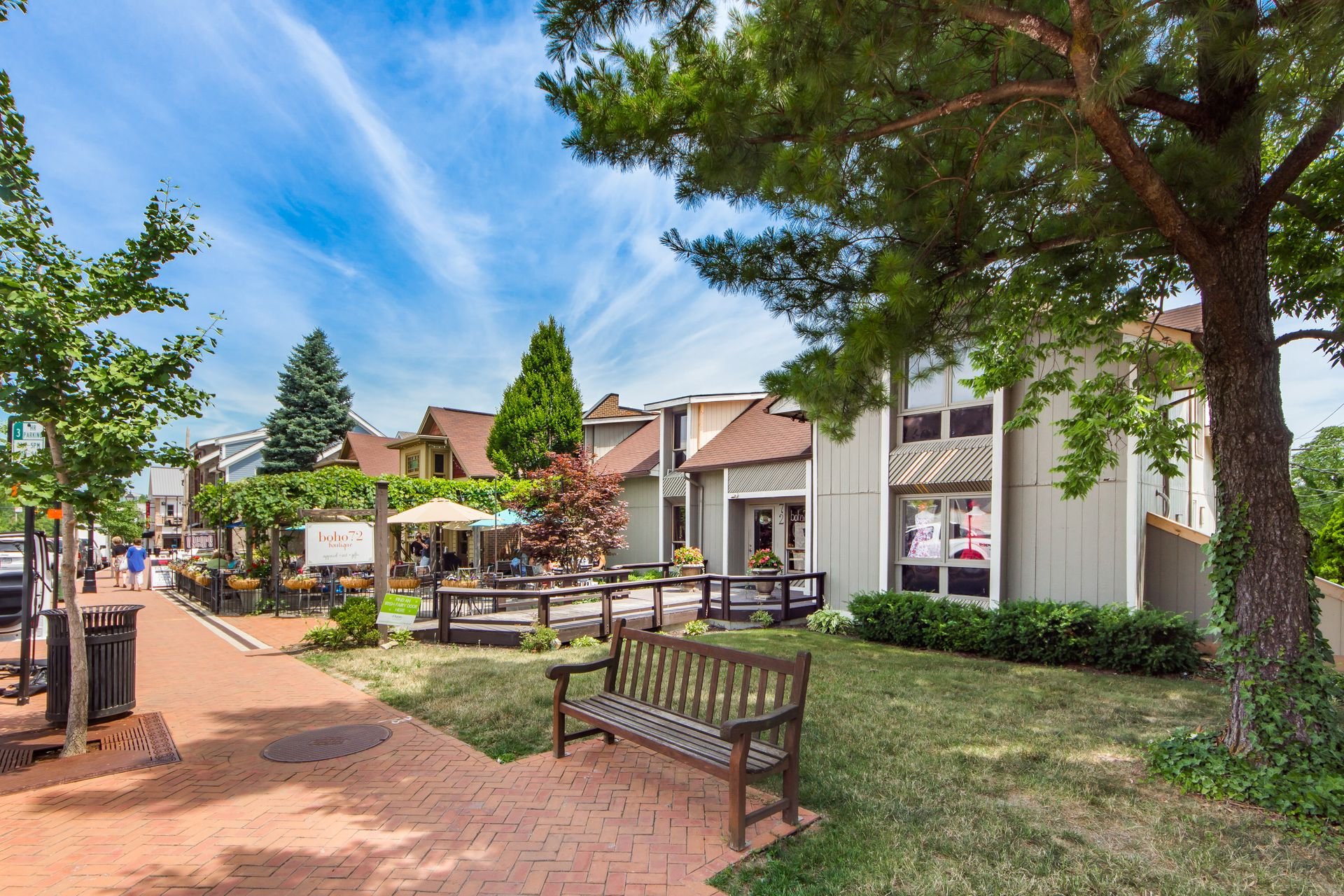
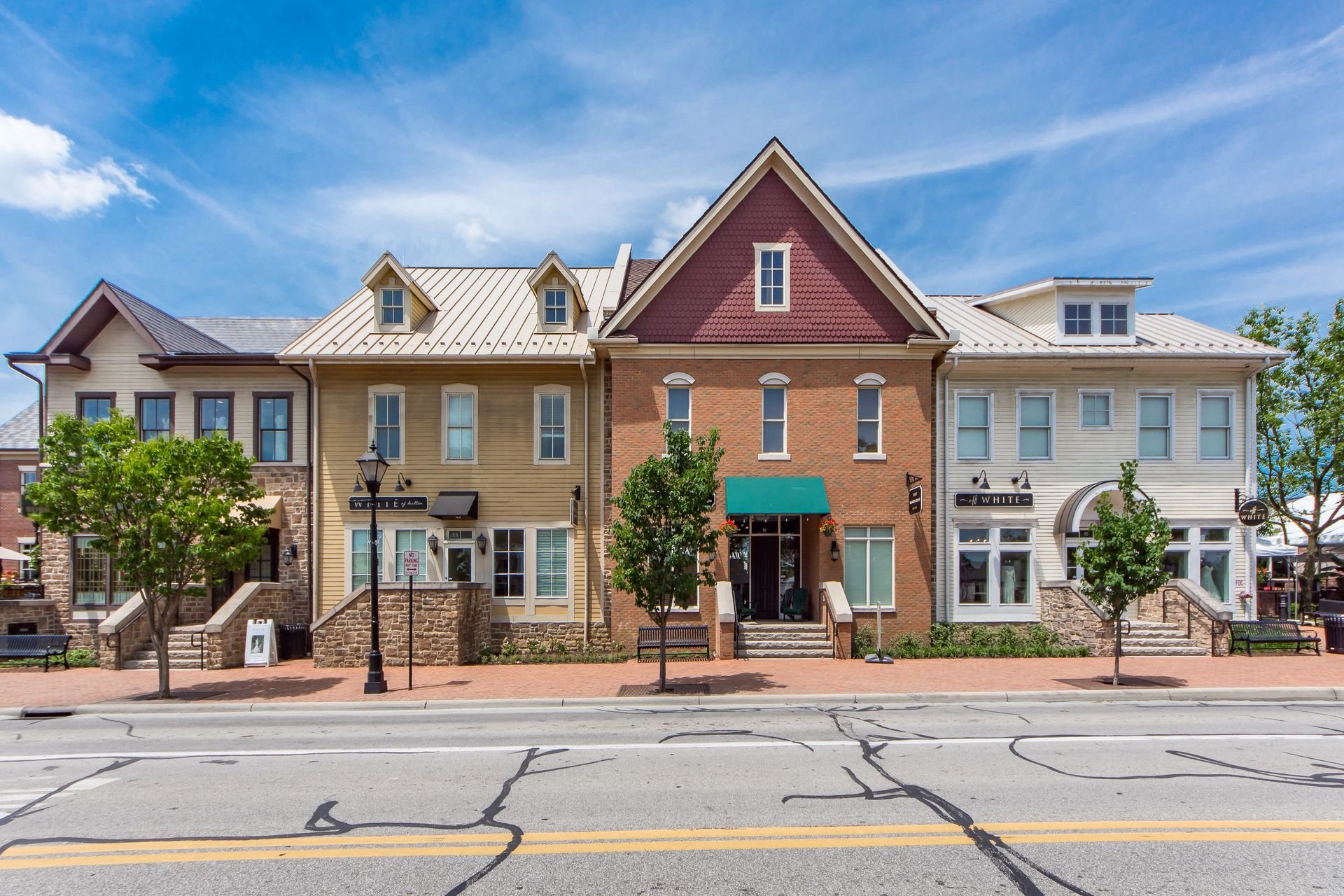
North of Lane Avenue, the city opens up. The Shops on Lane Avenue, first opened in 1949, and the Lane Avenue corridor run toward Ohio State, which sits just to the southeast — close enough that Lane Avenue is the direct route to campus. Tremont Center, from 1951, and the Tremont Road corridor are the everyday shopping spine for the central neighborhoods, and Kingsdale Shopping Center anchors the north end. Northwest Boulevard, built along one of the city’s original streetcar lines, still carries the curving street pattern the Thompsons laid out, and it is the route of the Fourth of July parade. Toward the west, Riverside Drive runs along the Scioto River, where some of the city’s largest and newest homes sit.
The parks stitch the two halves together. Northam Park, at 2070 Northam Road, is the city’s gathering ground — 22 acres with ballfields, tennis courts, and the Tremont Pool, next to the main library at 2800 Tremont Road. Thompson Park, at 4250 Woodbridge Road, has winding trails and a hilltop view. Sunny 95 Park, at 4395 Carriage Hill Lane, holds the Amelita Mirolo Barn, the stage for the summer concert series. The rest of the 21 parks are neighborhood-scale — Reed Road Park, Miller Park, Mallway Park, and the small green spaces the 1913 plan scattered through Old Arlington.
The city’s schools are geographic anchors more than anything else: five elementary schools — Barrington, Greensview, Tremont, Wickliffe, and Windermere — plus Jones and Hastings middle schools and Upper Arlington High School at 1625 Zollinger Road. The MLS market figures below are reported for the Upper Arlington City School District, which covers the city and extends slightly beyond the city line, so they describe the district area, not just the homes inside the city limits.
A year in Upper Arlington
Upper Arlington runs on a civic calendar, and living here means living with it — the whole city turns out, on the same streets, on the same days, year after year. The biggest day is the Fourth of July. The Upper Arlington Civic Association’s parade steps off at 9 a.m. and runs south on Northwest Boulevard from Kingsdale to North Star Road, with floats built by individual streets, antique cars, clowns, and marching units — a tradition that goes back to the Field Day the community once shared with Marble Cliff and Grandview Heights. Residents tie their lawn chairs along the route days ahead to hold their spots. The day starts earlier, at 7 a.m., with the Wake Up Call, when association members cruise the neighborhoods announcing the celebration, and it ends at Northam Park with Party in the Park from 5 p.m. and fireworks at 10 p.m.
On Labor Day, the Upper Arlington Labor Day Arts Festival takes over Northam Park. Established in 1966, it draws more than 25,000 visitors for about 200 juried fine art and craft vendors, live music, art activities, and food — 10 a.m. to 5 p.m. on the Monday holiday, free admission. In June and July, the city’s free outdoor summer concert series brings local and regional musicians to the Amelita Mirolo Barn in Sunny 95 Park. In the fall, the Parks and Recreation Department hosts Fall Fest, and the Halloween festival at Tremont Elementary turns out the neighborhood with crafts, treats, and pumpkins. December brings Winter Fest and the holiday tree lighting. Spring brings the Spring Fling, the Taste of UA festival, and the Summer Celebration. Dates move year to year; check the city calendar before planning around any of them.
The houses themselves
Read Upper Arlington’s streets and you read its building history. In Old Arlington, the stock is the 1913 plan’s architecture: Georgian, Tudor, Dutch Colonial, French Normandy, and Mediterranean revival homes, plus Bungalow/Craftsman and Late Victorian houses — more than 900 contributing structures in the historic district, on wide lots with mature trees. Because the district is listed, exterior work is subject to its building guidelines, including demolition restrictions, so a renovation plan there starts with the rules, not the drawings.
North of Lane Avenue, the stock changes. The postwar tracts are mostly ranch-style homes on gridded streets — River Ridge is the classic example — and the homes get larger as you move north into the 1960s neighborhoods and west toward the Scioto River. Layered into both halves are condominiums and townhomes, and they are a growing share of the market: 69 condo sales in the first nine months of 2026, up from 60 a year earlier, against 302 single-family sales.
For buyers, the practical point is the same as in any established suburb: two homes with the same bedroom count can be very different propositions — a 1920s revival home in Old Arlington, a postwar ranch north of Lane, a newer home toward the river, or a condo with an HOA. That spread is where local pricing knowledge matters most, and it is why the citywide average price tells you less here than in a smaller neighborhood — the subject of the next section.
What buyers should know
Expect to move fast — and over list. Well-prepared Upper Arlington homes sell in about 16 days, and sellers here receive 100.2% of original list price on average. Being ready — financing lined up, priorities settled — matters more here than watching and waiting.
Price the pocket, not the city. Old Arlington, the postwar tracts north of Lane, and the river are different propositions — revival homes on wide lots, ranch-style homes, larger newer homes — with different prices and renovation rules. The citywide average of $789,540 sits well above the $675,000 median; price the street you are buying on, not the city as a whole.
Walkability is pocket-by-pocket. The city average Walk Score is 45 — most errands require a car — but the Mallway, Lane Avenue, and Tremont Center are walkable for the streets around them. If walking to shops matters to you, weigh the specific street, not the citywide score.
Mind the historic district. In Old Arlington, exterior work is subject to the district’s building guidelines, including demolition restrictions. Factor that into any renovation plan before you offer.
Condos are a real route in. Condo sales are a growing share of the market — 69 in the first nine months of 2026. Read the HOA budget, what the fee covers, any rental caps, and any pending assessments — the monthly cost of the home is not just the mortgage.
Get in before the public launch. Well-prepared Upper Arlington homes still draw multiple offers, and sellers here receive over list on average. Our Private Exclusives and Coming Soon pipeline is often where an Upper Arlington search starts — tell us what you are looking for through the buyer questionnaire below and we will keep you in that loop.
What sellers should know
Stage and photograph before Coming Soon. Ideally, all staging and photography are done before your home is listed as Coming Soon. The 3D tour, floor plans, and video can follow between Coming Soon and going Active on the list date. Sellers — and pets — should be out of the house for staging, photography, and the 3D tour.
Build demand in phases. A Private Exclusive phase, then Coming Soon, then Active gives demand time to build in stages, instead of spending your first weekend all at once. The Colchester Road result above was sold this way — a week-long Coming Soon, 6 offers, $71,217 over list.
Price from evidence, not algorithms. With few direct comparables on the market at any one time — and a spread from condos to multi-million-dollar homes — pricing is a judgment call that has to be argued from recent closings across the area, not from an automated estimate. Start with a proper valuation, below.
A soft month is not a soft market. September’s closings and average price both fell against a year earlier, but the nine-month median is up 10.1% and months of supply is still 1.7. Price off the nine-month trend, not a single month.
Get access to Private Listings
Fill out the form to receive our comprehensive list of off-market listings.